
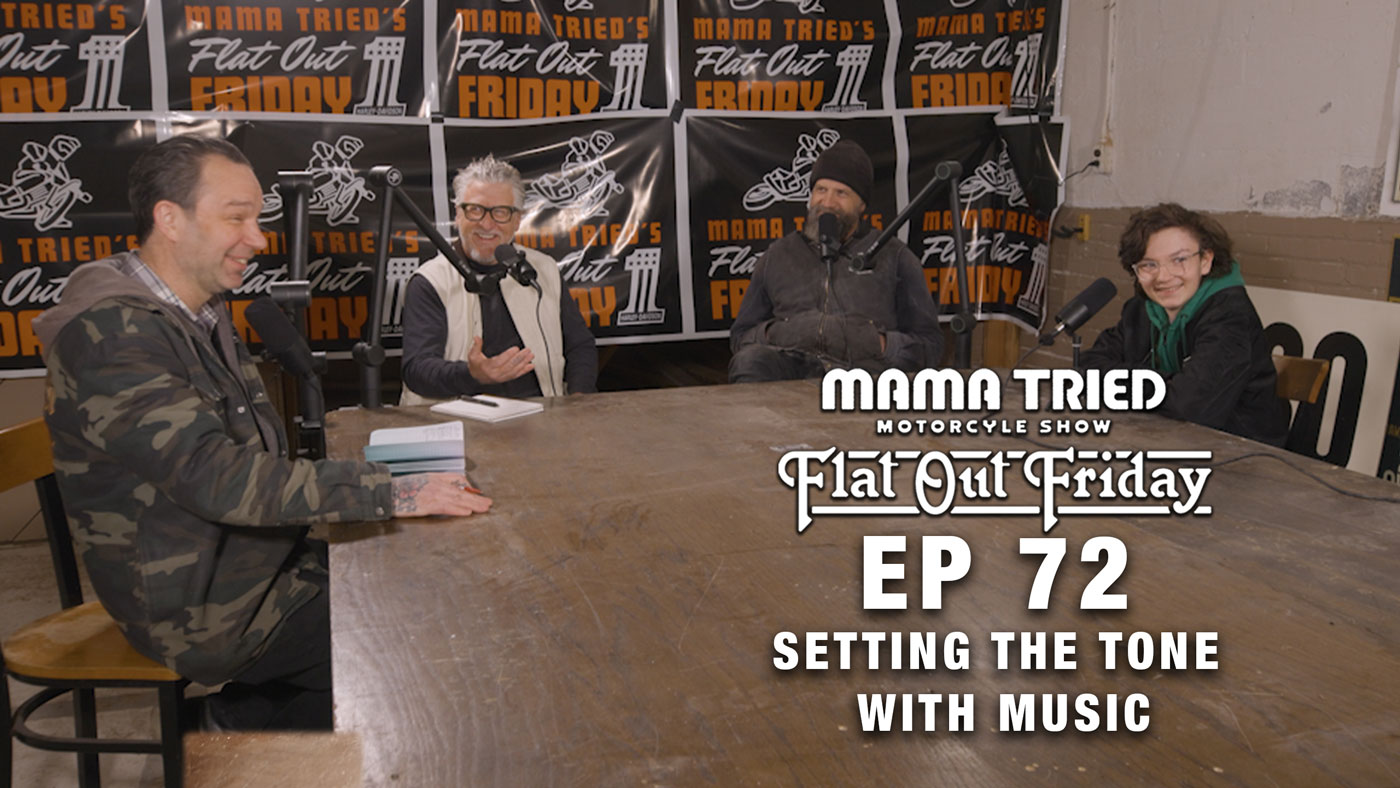
This ones all about philosophy of music. DJ Merit, joins us. Merit curates the music at the show and he goes over how to music reflects on the vibe.
Or – WATCH the show on our YouTubes
Episode 72: Merritt Prach – The Freak Beacon
Full Transcript
Jeremy: You — we — I don’t think I’m making a bold statement. Few of us hide our passions. We hide our stoke. It’s written on our face. It’s written in our energy of what we enjoy. And to see Magic Mike live his dream. I’m stoked for that.
Warren: Is he gonna put a bike up in the — like the script goes, I need to see your face. The script goes — I want to hear the script.
Jeremy: Okay. Well, I do my bit. Let’s hear it for Magic Mike. He comes in through the doors. Listen to this. We’re trying to do a thing where we got him on camera and it’s showing on the screen behind me. So, Mike, like a talk show, he’s riding his bike through the crowd. So, the crowd sees him on the street and then it follows him through the crowd.
Warren: Sure.
Jeremy: Here he is. Magic Mike. We got to get this bike up on the stage. It goes on this thing that you have. We have — it’s Insta-Shop.
Warren: Okay.
Jeremy: And then, “DJ Magic Mike, thanks for coming. Let’s hear it.” Are you — what personality are you?
Warren: I’m the green suit. Green sleeves.
Jeremy: Are you — do you have your shades on or not?
Warren: Yeah. Lee Greenwood. Yeah. And my whole bit is like I’m annoyed to be there. “You people don’t know culture and I got to get to bed.”
Jeremy: But the whole time it’s like people are like monkeys with cymbals, right? They’re banging beer cans.
Warren: I hope you’re recording this.
Jeremy: All right. Good. And I’m annoyed. That’s the — hopefully that passes. I was saying with Brian, our best case scenario is a script we wrote, we’re just off of it. Like it just — we fall apart because we can’t — because it’s so crazy we can’t even maintain a script. Worst case scenario is it just doesn’t bite.
Warren: Yeah. But is that even so bad?
Jeremy: No. It’s whatever the camera catches too. I mean, it would feed your soul if it bit. Would it feed yours?
Warren: Yeah. But if it didn’t, still there with my buddies, right?
Jeremy: I hate — I’ve been at many events where we’re together. Other things I organize are together and then you’re in the back room and then you’re listing, “Well, it did snow today. Well, it is cold out.” You start justifying. You start trying to make yourself be happy, right? That only 17 people came.
Scott: Sure.
Jeremy: When you’re talking, you’re standing in the back of a bed.
Scott: Yeah, I think we’re okay.
Jeremy: Oh, people — you could buy tickets in advance. I think we’re at 100.
Scott: How many people can that place hold?
Jeremy: 500.
Scott: 105?
Jeremy: So the thing is like the cap doesn’t really apply to us because there’s people coming in and out. So like — madness.
Scott: Yeah.
Jeremy: So anyway, expect to see the police and the fire department. At least one of them. Take your pick.
Warren: Merritt, do you want to exit the stage or you want to hang out here?
Merritt: I think he hangs out. He’s like Phil.
Warren: Yeah, I’m cool with whatever you guys—
Scott: Wish you had a drum set. You could Max Weinberg.
Warren: Are you good on the drums?
Merritt: I took lessons for a little bit. My uncle — he’s a drummer. I did lessons for like a summer on Zoom.
Scott: Yeah.
Merritt: Drums over Zoom. Surprisingly, believe it or not, actually doesn’t work that well. So, I didn’t have — I didn’t—
Scott: Who would have thought?
Merritt: Yeah. I didn’t get probably the best coaching there, but it was fun, you know, for some chipping away. Got some basic technique stuff.
Scott: Yeah. Show me your — show me your air drums.
Merritt: Okay. Well, I’ll be the sound. You do it. Elbows up.
[Air drumming]
Scott: Thank you. That’s my audition for Genesis.
Jeremy: Okay. Well, this has got to be our 80th — first — 81st.
Warren: It’s 72nd.
Jeremy: Really?
Warren: Oh, yeah. We’ve been stuck in this limit of the 70s for a long time.
Jeremy: Irrelevant. And so is Scott’s treadmill, if you ask me. Oh boy. If you asked me what the number was, I never — I don’t — our 73rd episode. And we are rapidly approaching the Mama Tried week. And it has become a week.
Scott: Happy holidays.
Jeremy: I think it’s fair to start to begin to say.
Scott: Sure.
Jeremy: And I wanted to just go over a couple things. I wanted to explain them in long form before we invite our guest up on stage. You know, one thing I came across in a dream the other day and I think it defines our lanes. Hold on. This will only take about 45 minutes.
Scott: Did everybody go to a bar before this that like I wasn’t invited to?
Jeremy: Cuz Warren, I was talking with Harley about some details and some questions came up and I was like, whoa, whoa, whoa, whoa. Warren talks about the money. I talk about philosophy.
Scott: Sure.
Jeremy: And Scott talks about the art. Stay in our lanes. We stay in our lanes. Is that a fair — I don’t know if they’ve ever been defined so clearly to me as just that.
Warren: Fair.
Jeremy: So philosophy — where are we going? Why are we going there? And that’s what I want to talk about today is a little bit of heavy philosophy. However, I do want to give some hard factual — what do you call it when information is used immediately? It’s called when you have a discussion and it’s very prudent to a situation like how to change a tire.
Warren: Poignant.
Scott: Practical is a better word for this.
Warren: Yeah.
Jeremy: I want a 10-dollar word. I know. I feel like you guys are all firing on all six cylinders and I’m over here on three sticks together.
Warren: Okay.
Jeremy: I wanted to give — I’m going to try to get caught up. I want to get some real information. Scott, I don’t know if you know this. Warren, I don’t know if you guys know this, but the week of Mama Tried starts on the 17th of February.
Scott: Sure.
Jeremy: And we have an indoor — the world’s smallest indoor motorcycle race at the Coop. At the Coopridge. By the way, I’ll be at the Iron Horse Hotel there all week. You guys will be there.
Warren: I’ll be there. I’ll be there.
Scott: No, I can’t. It’s too much. It’s too much. I don’t know. I seriously do not know how you guys did that. It just like as if the week of insanity wasn’t enough. You also need it to be like 24 hours.
Warren: Yeah.
Scott: You need a 24-hour—
Warren: I don’t find—
Scott: Does your family stay with you, Warren?
Warren: They’ll be there on — well, the boys come on Sunday and Stacy will be there on Friday and Saturday night. Otherwise, I’m just there by myself.
Scott: But you also — like it’s not like you can just close the door and like and then it stops.
Warren: Absolutely can.
Scott: Really?
Warren: Yeah. I find comfort and quiet at the Iron Horse. I find comfort and quiet in my home.
Scott: Sure.
Warren: I don’t separate from everyone else. It’s constantly, right? So for you guys it’s just to have a room is like—
Scott: Yeah.
Warren: Right. Because I’m Jeremy Motorcycle Jeremy. My family, my wife, my kids don’t care. When I come home, the recycling still needs to get taken out.
Scott: Exactly.
Warren: Right. It doesn’t matter that it’s Mama Tried week, Friday week.
Scott: It’s almost like to come at you harder because — spite.
Warren: Mhm.
Scott: Yeah. Cuz you’ve been planning and you’ve been gone with the planning part of it. So you’re just — you’re gone gallivanting. You’re gone — you’re out. You’re having a good time with your boys. You know, you smell like whiskey and barbecue and — okay. I’m here with the kids working my job, alone, taking them to soccer practice. And now you want to go to bed. No, the dishes need to be done.
Jeremy: I’m just making up a hypothetical, but that’s why I like staying in the hotel. It’s a pause in my life.
Scott: Right.
Jeremy: Okay. Vacation. I feel you.
Warren: Tuesday night is the mini bike race. Wednesday is also a mini bike race at Elwood’s.
Jeremy: Wait, wait. Two?
Warren: Oh, Tuesday’s — and Tuesday’s at the Coopridge. Cooper 17. The world’s smallest indoor motorcycle race.
Scott: Yes.
Jeremy: I like the overhead shots of that.
Scott: That’s — I know. Me, too. That’s — that’s Shakes.
Jeremy: Really?
Scott: He brought a little 360 camera.
Jeremy: Damn, that was sweet.
Scott: Yeah, I brought a drone and crashed it.
Jeremy: At first I thought — you did crash it inside the—
Scott: It’s a little baby one. So there you’re supposed to—
Jeremy: Did it just run into a pillar or something?
Scott: I think I ran into somebody.
Jeremy: Oh, you’re doing like the low chase.
Scott: I think a mini biker hit it.
Jeremy: Yeah, we have the event at Elwood’s and I just want to give a little brief history of that real quick. I sold that to Nate. I begged Nate to do it and now it’s pretty — it’s pretty standard. It’s got a life of its — it’s got a life far beyond me. It’s got a—
Scott: Yeah.
Jeremy: Thursday, Harley-Davidson Museum. Great tradition of bringing your race bikes there, getting in free admission to the museum if you bring your race bike. I don’t — I think the mini bike race is cool in the parking lot, but I don’t think that’s even the best thing going on that day. It’s the energy inside the bar. I don’t know if they’re having live entertainment or a DJ this year, but you get to get in for free to the museum and show your race bike at the museum. So, it’s very — it’s got good optics for yourself.
Scott: Yeah. Yeah.
Jeremy: We’re leaving there and we’re going — it’s kind of the day that — it’s also kind of the day that everybody’s coming into town and so there’s a lot of like — people that — it’s when you first see the people that you haven’t seen all year since the last show. That’s the greeting room for the weekend.
Scott: Yeah. Yeah. So to speak.
Jeremy: It’s a good start because the next is — that night at 9:00 we’re going to rent a theater. We’re going to rent a club. A disco club.
Scott: Do people use the word disco anymore?
Jeremy: Discotheque. A nightclub. And, you know, here’s just — here’s something we can bounce — I want to bounce off you philosophically. Well, you know, chopper dudes, people have this stereotype. Even amongst our friends, we stereotype ourselves. Chopper dudes don’t like those kinds of things. Chopper dudes don’t want to go there. And what do you say to that real quick? I mean, of course, I can refute that, but what do you think to that?
Scott: Oh, come on. Doesn’t make it — okay, that does. But also that just doesn’t hold water. I feel like everybody wants — partying is like that’s half of the thing. It’s where your friends are going to be so it doesn’t matter where you’re at.
Warren: Yeah. We have chosen that specific location to have elevated fun. And I don’t want — one of the motivators for us doing it there is I don’t feel like I could con someone or beg someone to have that party at their place only to have taken off their Christmas card list the following Christmas. You know what I’m saying?
Scott: Yeah.
Warren: It’s quite a ruckus to bring it to an establishment.
Scott: Yeah. Also to highlight, it’s a non — it’s a non-corporate run venue. There’s no live musician — he’s a locally — Milwaukee locally owned and operated just like ourselves. And that venue has been there since 1928.
Warren: Damn, that’s cool.
Scott: Cactus played there like a couple years ago, which I missed. I didn’t know about it until like two days afterwards.
Warren: Never heard of him.
Scott: You know, we’ll talk about that in a little bit.
Jeremy: Friday, of course, is Mama Tried. I’ll do a podcast, Brian — if we’ll do a live. Can we do a live about just Flat Out Friday information for the riders? Saturday, of course, is the Mama Tried show. 10 to 10 this year. Is that what it is?
Warren: Yep. Yep.
Jeremy: Middle — breaking up the day with our stop at Kochanski’s. Scott — or sorry, Warren, you picked Kochanski’s as part of being part of this routine of the week. Why Kochanski’s? What?
Warren: It’s Milwaukee. It’s — well, what I envision Milwaukee is, right? I’m not technically from here. So, when I walk into that place, it’s just like — you get that — it’s such a great place to bring people from out of town.
Scott: Yeah. Yeah.
Warren: It’s so quintessentially Milwaukee. You get it all. You get the PA and the weird lights and the bar is overrun. You can’t get a drink and—
Scott: Yeah. The bathroom’s a one-manner. It’s great.
Warren: Yeah. Dancing. People are — floor is wet. Everyone’s shitfaced.
Jeremy: After that, the post party, the official post party is at the Iron Horse Hotel. Is that correct?
Warren: Details to come on that. We’re still starting all those fine details.
Jeremy: The next day we call that church. Get to the Mama Tried show on Sunday morning to see it with the light and — when the light’s streaming in early in the morning on Sunday is — it’s one of the highlights of the weekend.
Scott: It is. If you can muster enough energy to get there by Sunday, that’s — finish line. If you can get yourself out of bed on Sunday morning, that’s quite a feat.
Jeremy: 10 to — 10 to 10 — to 4 — to 3 — 10 to 3. Then there’s talk of ice racing. You know, I’ve been — people have been asking me for information about ice racing. We are not even at the 15-day forecast for me to predict if or where there will be ice. You never know. And I think it works best if it just organically happens. So some people are going to set it up and we’re going to tell you that that’s where it is. There’s no organization on our part. We’re just letting you know that this is happening there. McKinley Marina is where — the closest place that we would send people if there is actually something happening and there’s good ice. But we just don’t know.
Warren: You know they have saunas there.
Jeremy: That’s what I heard.
Warren: But that’s new this year, right?
Jeremy: Oh, is it?
Warren: Yeah. I think it’s like a private — a vendor. Yeah. You buy some sort of a ticket and you get to take a sauna and then people jump into the — they have an ice-cut space out.
Scott: Yeah. It’s pretty cool.
Jeremy: So check that out if you’re in Milwaukee. I suppose we’ll have more details about that soon.
I want to address just two things about Flat Out Friday specifically. One is — we actually — Warren, you set this up. We have a deal with Harley-Davidson. Or they proposed us to give veteran tickets for $15.
Warren: Yeah.
Jeremy: So for Flat Out Friday, walk up only. You can get two tickets per ID for a veteran, current military, current first responder, retired first responder. It’s very loose on that. Just some sort of an ID. $15. Two tickets — $15 each.
Warren: $15 each. Walk up at the Fiserv. And the same applies for Mama Tried.
Jeremy: Yes. And the fees — there’s no fees. There’s no fees when you walk up. It’s $15 cash, no change. That’s it.
Warren: Yeah. And that was quite a thing to put together with Harley and putting together with the Fiserv and Mama Tried. So, thanks to all those parties. I mean, sorry, the Eagles Ballroom. All parties involved — a thank you because it’s really not that simple to make those kind of ticket deals happen.
Jeremy: So the same for walk up at Mama Tried — $15 veteran, first responder.
Warren: Yeah. All compliments of Harley-Davidson.
Jeremy: Yep. So they’re supplementing that because there’s fees on both ends and I don’t want to get into the didactics of it — or B2 — didactic — but it’s more complicated than it seems.
All right. I do want to say too about the pro purse. A while back I added $1,000. I don’t know if you know this.
Warren: How much is it now? Total for the pro purse?
Jeremy: I don’t know what it is total. I got to do the math on it. But it is $1,100 to win.
Warren: Okay.
Jeremy: In addition to that — well, it would be $1,200 to win because in order to win, you got to win the last lap because there is $100 to the leader of all 35 laps. To get — $1,000 to win if you win on the last lap. If you’re leading the last lap, you take — you get $1,100 to win.
Warren: Yeah. In addition, you get your lap money.
Jeremy: Got it.
Warren: Okay. Now, but what if you slide in on the last corner and take—
Jeremy: Lot of questions. And so it’s a significant purse. $800 for second. I don’t know. I don’t have the numbers in front of me. It’s a significant purse. But here’s what I think is unique about what we’re doing. I’m announcing this purse now for the first time officially. Now that we’re closed — we’re closed. We’re not taking any more pros. My point is I’m not using our pro purse to dangle you to come to our event. I’m using our pro purse to thank you for coming to our event. I think it’s a philosophical difference in what makes our event unique. That should be noted.
Warren: Mhm.
Jeremy: In addition, very excited that Cameron Smith’s coming.
Warren: I didn’t — what’s that? Is he riding?
Jeremy: Yeah.
Warren: Sweet.
Jeremy: And he’s gonna have a bike in the show, too. He’s got a new — he’s got — he said he got three Yamahas this year. He’s got a sweet setup.
Warren: I like that kid.
Jeremy: Yeah, he’s great. In addition, I put $500 towards women — the women’s race. I think $250 to win, $150 for second, $100 for third. I did that — do the math add up?
Warren: And then I added an extra — but there’s several women’s classes, right? Is it just—
Jeremy: There’s women’s boonies and then there’s open women.
Warren: Okay.
Jeremy: And then there’s the hooligan class, which is still going strong here in Wisconsin. $400 to make the main. So winner gets $400 and 12th gets $400.
Warren: Nice. That’s awesome.
Jeremy: To — all everyone — all 12 people who make the main — $400 bucks. I want to just take that pressure off. Instead of making it — that’s a lot of weight to be pushing around out there. You know what I mean? I kind of wanted to naturally filter out and be safe. It’s a lot of horsepower on a tiny little track.
All right, I’m going to introduce our guest. I should introduce them and clap. This is Merritt Prach. My son.
Merritt: Hi, thanks for having me.
Jeremy: Okay, a lot of rules here and I wanted to — I think he’s got a fresh perspective on the culture and the community of which we are trying to curate. A unique young perspective and he has nothing to gain — his opinion. He didn’t ask to be on our podcast. He’s not selling anything. He gets no clout. Maybe he even gets less clout at his high school for being on this podcast.
Merritt: Yeah. Don’t tell anyone at school.
Jeremy: And of course, I’m proud of my son, but that’s — I am not here to just like shine up a piece of—
Scott: No, Merritt is an integral part of what we’ve been putting on the last four years. How long? No, more than that. Right. Pre-2020 you were DJing. When did you start DJing?
Merritt: I think I started ’23, ’22.
Scott: Oh, really?
Merritt: Yeah. I’ve only been in it for a little bit, but I was—
Scott: I’m finally conscious now. So, I can — I can recognize you. Yeah. You got the — yeah. You walk in like you know the setup. You look in—
Merritt: Well, I — well, let me just start with some basics. So, who are you? You know, how old are you? What’s your deal here? What are you coming from?
Merritt: Thanks for having me in this wonderful studio here. A little chilly, but better than it was. Thanks for the heat.
Jeremy: You’re welcome.
Warren: Good work. Could hustle.
Merritt: My name is Merritt. I’m 18, freshly 18. I go to an arts high school and I’m a Capricorn. Did I miss anything?
Warren: Okay. This is — okay. This is not a nepotism sandwich.
Jeremy: Okay. So you — like Scott already alluded, you’re part of Mama Tried, not because you love motorcycles, but because you are a part of music.
Merritt: Yeah, I try to be. I mean, I go to an arts high school, so I’m studying jazz right now. But even before then, music has been a part of my life for all of it, I guess. I came out of the womb listening to 91.7 and Chris Trier and Dr. Sushi.
Jeremy: For people that don’t know what that means — 91.7 is—
Merritt: Yeah, we have a local radio station, college radio station that I’ve been listening to since — I think my mom got those speakers that you put on the stomach.
Scott: Yeah.
Merritt: So, it’s like, you know, people usually — it’s a radio station that’s rare these days, you know, and it’s been a cornerstone of our community. So, that’s great.
Scott: Yeah, I’ve been growing up on that.
Merritt: Growing up on that. And yeah, I don’t know. I just — I went to a Mama Tried event. I had like DJed before when I was like six years old at like a backyard party or whatever. And I was — the one lesson I was taught was anytime there’s a gap, go to the next song. And I interpreted that as anytime there’s no vocals, swap the song. So, I would be like anytime the singer would take a breath, I would swap back and forth between the two iPods. I don’t think I did very well at six.
Warren: But really that was like a thing. You thought we had just like two iPods like a mixer. It was great.
Merritt: But I went to a Mama Tried event — like pre-party a couple of years ago and I watched somebody DJ there and I was like, man, like I could do that. Looks so awesome. And here we are. So, yeah.
Scott: Well, you were probably like, “I probably have a better — more better record collection than that guy.”
Merritt: Yeah, probably. I mean, I’m sure there’s — I mean, there’s a little bit of arrogance in DJing. You — I mean, you have to be like hungry and competitive, but—
Scott: Well, like your dad is the minister of philosophy for Mama Tried Flat Out Friday. If we had a minister of music, you would be it.
Merritt: Sure. Yeah, I’ll take that. Yeah, I’ll take that.
Scott: Well, so related — what does the music have anything to do with this motorcycle event?
Merritt: It’s mostly atmosphere, right? We’re creating a sort of sense, a sort of vibe.
Warren: I’m feeling it.
Merritt: Yeah, exactly. A sort of groove.
Scott: Well, and I think that you also have a unique perspective because you’re young, but you also understand the music of the gray beards, but old at the same — like us, but you also know all the youth stuff. You know, hip-hop, you know, jazz, you know all the different genres.
Merritt: Well, yeah. Not that jazz is useful on a Saturday afternoon at Mama Tried, but you have the knowledge.
Scott: Yeah. It matches kind of what we’re doing out there, right? There’s a bunch of different motorcycles, a bunch of different people — cater to a round—
Merritt: Yeah. Well, I think Mama Tried is like — if you wanted — if you wanted to go to a motorcycle event where there’s, you know, Lynyrd Skynyrd, Led Zeppelin, you know, Patriot Rock, go right ahead. There’s a million other events you could go to. But Mama Tried, you get this. You get me who ate a bowl of Fruity Pebbles this morning to curate it, right? It’s like—
Scott: You get Leonard, but you get—
Merritt: Yeah, you get Leonard. I like to think of it — my philosophy with it is I sort of reel people in. So I play like maybe a Creedence Clearwater Revival song. Speaking of my father currently, I play a CCR song. I’m like, “You like this? You like this? Oh, here’s a gay house song.” Oh jeez. It’s like I try to keep people — I try to mix it up.
Scott: I try to, which is good. Which is really good. It keeps it interesting, keeps it fresh because there’s something for everyone.
Merritt: Yeah. Yeah. And the amount of times I’ve had people be like, you know, “You take requests? Play, you know, play AC/DC, play, you know, this, that, the other thing.” And I just want people to just like trust that like I’m going to play songs that you don’t like, but there will be a song that you will like in there.
Scott: Yeah. That’s—
Merritt: And that’s kind of the — accept the process.
Scott: Trust the process.
Merritt: Exactly. And I feel like that’s sort of the motto of Mama Tried is trust the process. You got to kind of give people the opportunity to decide whether they want to fuck with it or not.
Scott: Exactly.
Merritt: And that’s — and I do that with music. I don’t mean that arrogantly, but it’s just like — it’s something I’ve noticed.
Scott: No, but you have a good — you have a good background. We’ve talked about this in the sauna society. We’ve saunaed together and talked about—
Merritt: Secret sauna society.
Scott: Yeah, we do have a secret sauna society.
Merritt: Yeah, we haven’t been great about it this year, but we’ll get on that. But we mostly — what we talk about is music.
Scott: Yeah.
Merritt: Right?
Scott: Yeah. You were on a Pink Floyd kick for a while.
Merritt: I just — I’ve been listening to — I’m nearly finished that—
Scott: Oh, the biography of Pink Floyd.
Merritt: Yeah. And I forgot the author’s name, but it’s great. Really, really awesome. And I wish I would have read it a long time ago.
Scott: Did you watch the Bruce Springsteen, the new one? The movie?
Merritt: I saw it. I loved it. I thought it was great. I thought it would be — really powerful movie.
Scott: Yeah, cool.
Merritt: I was bawling by myself watching it.
Scott: Why? So was I. Why?
Merritt: The yearning to connect with his father was heavy.
Scott: Heavy. I thought — I really liked the way they portrayed alcoholism.
Merritt: Yeah.
Scott: Going into the bar and finding his father and it was shot through the height of an 8-year-old.
Merritt: Yeah. And also alcoholism depicted not as like abusive but as empty. As everybody knows that it’s happening and everybody’s sad about it and we can’t figure out how to get around it.
Scott: Yep. Yeah. Sorry to really put a lead in this conversation.
Merritt: I find that music is the only thing that really brings out emotions in me. That’s one of the things that like gets me going.
Scott: Yeah.
Merritt: I have a theory that like music is the most direct form of like human expression because it’s like these rhythms and these grooves and these melodies — like, we don’t know why, but we like them and we know what sounds good. We know what doesn’t. So it’s like — and it’s in a weird — music is in a weird place where everything else is visual and music is auditory. So it’s — I don’t know, it’s like feels so much more personal, I feel. And that’s what I definitely get — that sort of music thing.
Scott: Yeah.
Merritt: I don’t think I’ve ever cried to a movie and I’ve cried to an album hundreds and hundreds of times.
Scott: Movies are a close second and like they might be hand-in-hand, but music does it a lot.
Merritt: Yeah.
Scott: YouTube has been such like a — for me like such this treasure trove of — there’s all these like little crappy — and some of them are just clearly AI generated and you got to kind of like take it with a grain of salt. But like on bands that you just don’t know anything about, there really isn’t much out there to — you know, unless you really, really dig and find a book that’s been out of print, you know, for 10 or 15 or 30 years. But like last night I watched a UFO documentary and it was like — I — it was awesome.
Merritt: And do you know UFO?
Scott: I do know UFO.
Merritt: Okay.
Scott: Why is that funny?
Merritt: It’s just — it’s very — no one saw that coming. It’s very strong.
Scott: And like and they — and their first two records were like these like space rock things that I had never — I never even knew that there was like kind of, you know, like before the Lights Out for London stuff. Anyway, I got up this morning and the first thing I woke up and I like put those records on and started listening to them and I’ve been like floating on that all day.
Merritt: Straight to Apple Music and cop Bruce like essentials. Let’s go.
Scott: Yeah. Nice. It’s powerful.
Merritt: Yeah, it is powerful and it just like — and it’s never ending cuz something always leads to the next thing to the next thing to the next thing and then you end up circling back and you forget, you know, how good stuff was. Like I saw a thing — there’s a dude covering Cantrell Butterflies — I don’t remember the — or Jarflies. I don’t remember the name of the song, but it’s a heavy song and he was doing it so good and I forgot about that song. I went and got it and it’s part — you know, it’s on the playlist, so I’ll be putting it on. It’s great.
Scott: Yeah. Yeah.
Merritt: I feel like that sort of treasure trove thing is so crazy to me now, especially like living with the internet and everything now. Like the books are always laid out as like this happened and then this happened and this happened and this happened. But like with art history, especially music history, everything is like being like crossbred and like everything’s happening at the same time.
Scott: So, didn’t you just recently put a spreadsheet together? You mentioned that like really top — or something?
Merritt: Yeah, like the top like — what was like—
Scott: Sorry, didn’t you put like a big like comprehensive spreadsheet together of like something? You graded like—
Merritt: Yeah. The top 100 albums or songs or bands or—
Scott: In 2024 I had a Spotify playlist that I was just adding songs to all the time. I’d add the first song from an album into it and every day once a day I would hit shuffle and whatever it landed on, I would listen to it all the way through and then I would give it — I had my own little rating system. I gave it a thumbs up, a shrug, or a thumbs down and I did it—
Scott: No, there was a shrug plus.
Merritt: Sure. Yeah. There’s shrug thumb and shrug down also if you want to get technical. But—
Scott: Well, you — no, you listen to — I want to clarify — you listen to the full album, the full album — not just the song?
Merritt: The song — but — and so — and would you write a review for yourself or like notes about why you liked it or just didn’t like it?
Scott: If it was like wow or if it was like really terrible or just like, you know, I was like, “Oh man, this drags on too long.” But it was mainly just like first impressions and just like—
Merritt: So it wasn’t stuff you already had in your catalog. It was—
Scott: No. Well, it was like random.
Merritt: Okay.
Scott: I was the algorithm and I got some stuff I listened to before, but even still listening to it with the context of everything, it was great. I got like MF Doom one day and then Will Smith the next day. So, it was just like I never knew.
Merritt: Big Willie Style.
Scott: Oh, man. I don’t think I gave it very good review. Very good.
Merritt: What was an unexpected surprise? Something you came across your list, you listen to the full record, you’re like, “That was really good.”
Scott: Oh man. There are some out there, but I — oh, Britney Spears. I listened to a Britney Spears record. I was like, “Oh my god, this is incredible.” I was floored. I was like in the middle of my Spanish class just like with my jaw, my mouth open just like whoa. Just like listening to it. I don’t know. It’s — it was just like so — I don’t want to say it was like eye-opening or anything, but there’s just so much music out there, right? And even just that, I only got like whatever 366 albums and that’s just like to me that’s like surface level.
Merritt: That’s huge.
Scott: Yeah. There’s like so much and that already opened a Pandora’s box of other avenues and so many rabbit holes. There’s so many like stuff that I recognize like from that year.
Merritt: Are you one of those like going extremely nerdy deep and finding like the deepest of deep stuff?
Scott: Yeah, I try not to be, but I think it’s bred into me to sort of do that. I don’t — again I just don’t — I don’t mean it from like a place of arrogance, but I try to just like, you know, maybe this is a B-side that people have never heard of. So, I’ll play that at Mama Tried. You know, maybe this is a demo or a remix or something that — maybe a live version that’s, you know, maybe not as popular, but it’s from a big-name group or maybe that big-name group was influenced by the smaller group or whatever. And that’s sort of the energy I tell myself to bring at Mama Tried.
Merritt: It’s great.
Scott: Let me go back real quick. I asked you what was your best unexpected. What was the worst? What’s a popular record you actually find to be a poor record, poor album?
Merritt: I don’t think I listened to it that year, but I listened to the first Velvet Underground record recently with Nico.
Scott: I get it for you.
Merritt: Yeah. Well, we said we weren’t going to get political. We said we weren’t going to say the offensive.
Scott: No. Well, here’s an idea. Here’s a thing I’ve been kicking around and I’ve been kicking around this my whole life is like how do you trust your taste, right? Like how do you — like cuz there’s like there’s the — there’s stuff that you like — you don’t even know why you like it and you know it’s like — you know, like why am I tapping my foot to this Bay City Rollers song, right? That’s not — that’s not taste. That’s outside influence of like social pressures.
Merritt: No, but if you — do you know that podcast 500 — the history of music and 500 songs? So that guy’s — he’s, you know, clearly on the spectrum and he’s very into music and he has very particular opinions about stuff. His all-time favorite band, which he really, really limits himself on talking about, is the Monkees. And I trust his taste in music. I can’t stand the Monkees, right? Like, but so I find myself being like, “Okay, well, you know, is there something wrong with me?” Well, yeah. Or like, yeah, why is it that people love the Velvet Underground and will live and die by the Velvet Underground?
Scott: Yeah.
Merritt: And then we’ll be like, “No, compared to the Monkees, they ain’t shit.”
Scott: Well, I think it’s a bunch of things. I definitely — social stuff is — it’s like sports. It’s part—
Merritt: Yeah. I mean, who wants to be a Bears fan, which you have to be because you’re a Bears fan. You can change, but you can’t. It’s like a skateboard mentality.
Scott: Yeah, it’s — it’s definitely like — I was against the Beatles for a long time. I was just like, “Who cares? Like they all — they write is love songs.” But you place it into the context of the time and what the Velvet Underground was doing was so new that it’s been like influenced and influenced and influenced and influenced. Like you wouldn’t know it, but it’s — but it sounds like everything else. So you listen to it and you’re like, “Oh, this isn’t — I have heard this before,” even though people at the time were like, “What is happening?” So I feel like it’s a reflection of the time that it was in and sometimes things are just not for me.
Merritt: Yeah. You know what I mean? Like I don’t — people love Brussels sprouts, but I mean whatever. I’m all right. I’ll pass. So, whatever. I mean, I try, but I try to stay open-minded. Yeah. You know, with stuff like that. I went into Velvet Underground thinking like, “Oh, man. This is a classic. I see it everywhere. Like, people are — I’m going to love it.” And I listen to it and I was just like, “Yeah, all right. Whatever. Just didn’t do it. Not for me.”
Scott: But here — well, here’s another thing. So, speaking of the Beatles, this is another thing that I think about all the time is — if we hadn’t — are the Beatles great because they’re the first ones to do the things that they did? Like they, you know, they invented so many riffs and rhythms and, you know, they kind of — they were that bridge between old school rock and roll and newer — clearly great musicians and really good at writing pop songs, right? If we didn’t — if the Beatles had never existed, right? If Paul McCartney and John Lennon had never met, like who — where would music have gone? Like if — there would have been another Beatles, right? There would have been another — there would have been another Beatles who would have been that band that like that taught us what rock and roll and pop — it was like a transitional time for the youth to take the microphone, you know, and get after it. So yeah, it could have been called the Ants.
Merritt: Well, yeah, but I mean — if it — it could have been — it could have, you know, well said.
Scott: So I just like — that’s the thing I think about too. It’s like people who — I’m not a huge Beatles fan, but I recognize that they were, you know, groundbreaking and trailblazing, you know.
Merritt: Yeah. Because they got there first.
Scott: Yeah. And they figured it out first. But if it hadn’t been them — if you wrote Star Wars now, people wouldn’t care, right? Because it’s been — it’s been done right before. But because it was the hot thing at the time, it was so foreign.
Merritt: True.
Scott: It’s going to be monumental.
Merritt: Wasn’t even like — yeah. I think that has sort of been lost. And I’m sure that’s going to happen to us now. We’re going to look at something be like, “Whoa, this is crazy.”
Scott: Yeah. Nobody — I mean, no music had ever done or like taken people to that level — that many people all at one time was like — pandemonium was born.
Merritt: Yeah.
Scott: Do you think that affects how music sells or how music gets popular now? Because so much has been done. Is there much more ground to be broken?
Merritt: Oh yeah. Oh yeah. I mean there’s — I kind of just agreed with you without even listening to what you said. I feel like no matter what, like people are going to try and push themselves and try and reinvent the wheel. Like it’s that idea that like culture is the big thing and then people don’t want to participate so they create a counterculture movement and then that gets super big and that becomes a culture and then people don’t want to do that and so it’s just cycle and cycle and cycle. So, I feel like — like you said, there would have been another Beatles. There would have been a Rolling Stones. There would have been a Velvet Underground. There would have been Sex Pistols. There would have been Sex Pistols. I just think — I think so much of it is just like a reflection of the time, right? Like boomers were just like — like we’re teenagers, right? And so like now there’s these cute guys making love songs. Of course, I’m going to buy into that.
Scott: Yeah.
Merritt: So maybe you look on it now and you’re like, “Okay, like I don’t get it.” But at the time that’s every — that’s all it was, right? That’s all there were. So I hope that answers your question.
Jeremy: Let me bring it back to earth here. Let me just — let me bring it back down. You’re DJing Mama Tried.
Merritt: I am.
Jeremy: Okay. In the years past, we’ve had two DJs on Saturday and you had one on Saturday and one on Sunday. You were — now DJing the whole time.
Merritt: Yes.
Jeremy: 12 hours on Saturday, four hours on Sunday. Why not just make a playlist?
Merritt: I could easily just make a playlist. I’m not that good at DJing. I don’t know that much music, right? But I think—
Scott: Well, not to get — not to be — I’d say top five.
Merritt: Top five?
Scott: Okay.
Merritt: All right. I’ll take it. You know, there are like — there’s something so human about like music curation and music discussion that I think has been lost with like, you know, AI and Spotify and Apple Music and stuff like that. It’s like, “Oh, you listen to rock, here’s some more rock stuff.” But you talk to somebody and they’re like, “Oh, here’s this Japanese band from the 80s you’ve never heard of.” It’s like, “Whoa, these guys are great.” And I think there’s something so human about making and listening to a bad song, too, that I think that’s like — I don’t know. There’s like something so natural and it feels so much more — I feel like there’s so much more connection when somebody, you know, somebody is like behind the wheel, right?
Scott: Right. Like — yeah. Like WMSE, I think, is good at that because they’re like, “Check out this thing that I got somebody recommended to me and I’ve been really digging it and it’s, you know, here it is.” And, you know, sometimes you’re like, “Not for me.” But other times you’re like, “Man, that was cool.”
Merritt: Yeah. I’ve spent time of my life with this thing. Let me show it to you. And maybe somebody listening will be like, “Oh man, I really like that.” And then that becomes their favorite song. Like, you know — “You know where I heard that? This Mama Tried event.”
Scott: Yeah.
Merritt: So, I don’t know. I feel like it’s much more about like connection and much more personal if somebody’s behind it. And I feel like that’s sort of echoes the sentiment of Mama Tried. You guys are celebrating the people behind it all.
Scott: But also, you’re not up on like a balcony where nobody can get at you. You’re right there on the stage. You’re right at the top of the stairs.
Warren: Harness like — hang him where the helicopter was last year. He’s just like dangling up there.
Merritt: Plexiglass.
Scott: But do you have — because of that location — do you have people that you see every year that are just like, “What’s up?” High five?
Merritt: Yeah. Some dude gave me five bucks as I played a Led Zeppelin song. I’ve been trying to relive that high ever since. I’ve been looking for him.
Warren: Don’t give me ideas, Dan.
Merritt: Are you a good DJ?
Scott: No, not at all. Not even a little bit.
Merritt: This goes against everything we just talked about. There are — there are like kids at my school. There’s this one kid at my school who like — he uploaded a video of himself on Instagram. He’s like ripping it like, you know, scratching like crazy. I can’t do any of that. I don’t know how to do any of that. The most I do on stage is go from left to right. But I’m not good at DJing. I think I’m good with people. I think I’m good at reading people. And so a lot of DJs, I don’t mean this arrogantly, but like a lot of DJs are really good with hip-hop or they’re really good with house. That’s like all they play. It’s all they — that’s all they know. And they’re really great at those, but what if the crowd isn’t a hip-hop crowd? What if the crowd isn’t a house crowd? Right. I feel like I’m really good at like the pivot of just like, okay, this isn’t working. Let’s try a totally new avenue.
Scott: So, I feel like what I don’t make up for in like technical ability, I feel like I make up for in like personality. Like, it’s going to feel much more — I kind of want to feel like your friend who’s just like, “Hey, come check out these records I got.” That’s kind of my vibe with Mama Tried. It’s just like, yeah, come check this out.
Merritt: Well, you’re modulating the vibe, too, right? And one thing I learned from your dad was you can’t keep — you can’t bounce it off the rev limiter for six hours, right? Like I learned that like you can’t just play AC/DC — like Whole Lotta Rosie — like that level of song — like and keep that level going without dipping it down once in a while. Let everyone get a breather. Go to the bathroom, get a beer.
Scott: He’s got a soul song every once in a while.
Merritt: Yeah. And you got to just give them a second to like regroup.
Scott: It was Merritt that coined the phrase to me. And on that same sentiment, you only get so many woos in life. And if you’re wooing at everything, the woos become meaningless. Does this make sense?
Merritt: Yes.
Scott: You got—
Merritt: I stand by that.
Scott: Yeah, I stand by that. You got to throttle back the woos.
Merritt: Yeah. Yeah. Exactly. It can’t be woos all the time.
Scott: And like — is this woo-worthy?
Merritt: Always chasing the first high in the woo economy. Like where is it? You know, where does it land?
Scott: All right. Can’t be full woo.
Jeremy: If we wound it up, we started this conversation — someone brought up the term of like you’re cultivating the culture of the room or Mama Tried. What is the culture of the room of Mama Tried? What is the vibe of the room?
Merritt: I think — so yeah, as someone — if I can elaborate on that question — as someone who doesn’t come from the motorcycle world, right? Like you’re — of course you’ve been around your whole life cuz your dad and all of us, but like — I’m — you know, I don’t — I’m the head of my student council at school, you know. I don’t — I don’t — the most I go to is like a meeting after school. I don’t go to racetracks or anything like that. No offense to people who do, but it’s just like — it’s not my thing.
Scott: It’s not your thing.
Merritt: Yeah. I think from what I see as like the common like stereotypical like white dude with a big bushy beard and like a leather jacket stinking up a bar. It’s like a biker, right? And I’m like, “Oh god, it’s a biker. It’s a biker event.” It’s so like needed and necessary for spaces like Mama Tried to exist to highlight the people that don’t fit those white dudes with big bushy beards and denim jackets, you know? Maybe there’s like some — but they’re also—
Scott: Well, they also feel comfortable there.
Merritt: Yeah. Yeah. Like maybe there’s some—
Scott: I feel great there.
Merritt: Exactly. Yeah. Maybe there’s like a Black woman who’s just as into motorcycles as this other dude. But now there’s a space for her to go and to go and, you know, express that. And if you’re a white dude with a big bushy beard with a leather jacket, go to another event. There’s plenty more out there for you. Let us have Mama Tried. You know what I mean?
Warren: Mama Tried.
Merritt: They could still come.
Scott: They could still — yeah, buy a t-shirt. But Mama Tried is like for the freaks.
Merritt: Yes. For the weirdos. And I feel like we need spaces like that in any realm, in any world. We just need a place that is warm and inviting and—
Scott: Yeah. And you know — to do it with motorcycles and people — better way.
Merritt: It’s the people. It’s the people. I feel like that’s — and high fives.
Scott: Yeah.
Merritt: I feel like that’s the biggest detractor cuz when you think, you know, when I thought biker, I thought like, you know, something totally different. And now it’s like I see like the Midwest hospitality and like all of this like great like — it feels like — I’m not a motorcycle person, but I still feel so welcome and included as, you know, a music guy, as a DJ, you know? It’s beautiful.
Jeremy: Let me have a little bit of fun with your knowledge of your dad’s friends.
Merritt: Oh god.
Jeremy: Freak. Okay, real quick. Freak or not a freak? Scrapper Dan.
Merritt: Freak.
Jeremy: Okay, capital.
Merritt: Capital F.
Jeremy: Okay. Doug Frasier.
Merritt: Weirdo. You know, he’s not a freak.
Jeremy: Okay. Okay. How about Warren here?
Merritt: Yeah. Yeah, Warren’s a freak. Definitely. Definitely. Definitely.
Jeremy: What about Lala?
Merritt: Lala’s a weirdo. Definitely.
Jeremy: So, just real quick, what’s the threshold of a freak or weirdo? Is a weirdo almost a freak? Is — you know what I mean? I need some more science.
Merritt: They’re superfluous. They’re like, it’s like — instead of a spectrum going like this, it’s kind of like a horseshoe, you know? It’s like you can be a freak like — not all — all weirdos are freaks. Not all freaks are weirdos. You know what I mean?
Jeremy: I got to play this one back to get back to it.
Merritt: A little too didactic. I apologize.
Jeremy: I’m sorry.
Scott: Okay. I appreciate the choice.
Jeremy: You know, if you — I know you’re really good at multitasking cuz like you — with the spreadsheets and like — you like to — even you make lists when you’ve DJed in the past, you’ve made lists of what you played.
Merritt: That’s where I get that from.
Jeremy: Right. Look at that. Lot of lists. I feel like there’s not enough motorcycle people with monikers, you know? There’s not enough Bobby the Legs. There’s not enough Slippery Pete in the world.
Merritt: A lot of fingers.
Jeremy: Yeah, maybe that — maybe that’s this year is the — the Merritt challenge. You can just like look out in the crowd and you be like, “That guy’s like — I got one for that guy.”
Merritt: Yeah. Yeah.
Scott: Dirty.
Jeremy: So anyway, Scott the Ship Johnson.
Merritt: But despite being freaks — and you know this from growing up at our house — there’s — we live around freaks.
Scott: Yeah, we — you haven’t been to Warren’s house maybe at any length, but I’m assuming Warren has a lot of freaks at his house.
Warren: Only when you guys come over.
Scott: Okay. Rough host.
Jeremy: But freaks are good people.
Merritt: Oh, freaks are great people. I love the freaks.
Jeremy: Me, too. I love the freaks. That’s why you moved to—
Merritt: Welcome to Milwaukee. We’re the city of freaks.
Scott: Non-boring people.
Merritt: Exactly. Everybody’s so weird. And that’s so much fun. You go to other cities and everybody’s the same. It’s — oh, man.
Scott: We met a dude who like ran — he like owned bug repellent and it was like — he like took our picture. It was awesome. Where else does this happen? You know what I mean?
Merritt: We’re in — we’re in — I think I — what does that mean?
Scott: Exactly. Exactly. He like owned — he said he was the number one killer in Afghanistan cuz he killed bugs cuz he had like bug — some sort of stock in bug repellent and he took our photo.
Merritt: Thanks for coming to Milwaukee.
Scott: Yeah.
Merritt: And I never seen him since. Thanks for coming.
Jeremy: Milwaukee is a weird place.
Merritt: Oh, that’s great.
Jeremy: No, I mean but really — is Milwaukee a weird place?
Merritt: I mean, you know, yeah, Cleveland has weirdos, doesn’t it?
Scott: 100%. 100%.
Merritt: But we’ve — Mama Tried has created a beacon like moths to a flame for all of the freaks and weirdos to take a one-way trip there.
Scott: You know that’s true. I don’t think I can refute that.
Merritt: We are a light — we’re like a lighthouse.
Scott: Yeah. Yeah.
Merritt: Calling the freaks and the freaks.
Scott: Yeah, that’s true. You know, I’m sure you know — other events have their sort of freaks, but maybe they’re like, “You know what, this is too much. This is too freaky” — with — maybe you’re not welcome here.
Merritt: Mama Tried. You guys can’t get enough. They’re — people are climbing over themselves to get into the thing.
Scott: The freaks are climbing in.
Merritt: Yeah, the freaks are climbing in.
Jeremy: And just real quick, what is the definition of a freak? You know, give me some — give me some.
Merritt: Everybody knows, you know, a freak. Everybody knows. Someone that doesn’t — someone that’s a—
Scott: It’s like pornography.
Merritt: Yeah. Tanned. They’re trans. You know what? What do you call — they’re on the margins of society.
Scott: Yeah. Marginalized.
Merritt: Yeah. Everybody listening has pictured a freak in their head, whether—
Scott: I think it can be overused though. It can be a meaningless word.
Merritt: It’s overused. But we’re using it in its purest sense.
Scott: An outcast.
Merritt: An outcast. Yeah. Yeah. And we — and Scrapper.
Scott: Yes.
Merritt: You know, and again, that does not — a testament to his heart or his talents. They only amplify them.
Scott: No. Exactly.
Merritt: I think everybody — I think everybody’s got a little bit of a freak in them, you know, and I think we need spaces like Mama Tried, like Flat Out Friday to sort of let your inner freak flag fly. I’m not the person who coined that term, but you know, I feel like that’s — that’s — because everybody — if everybody wanted to just like — I feel like people are just so comfortable, right? People can create their own like little bubbles of safety on social media and stuff like that. I don’t mean to turn this into like a — why I ought to — that’s a—
Scott: Soap box.
Merritt: Soap box. Yeah, I get it. Finish your point.
Jeremy: But I think Milwaukee has a unique motorcycle culture. We hear that from people who come here to visit and they’re just like, “Man, I want to, you know, I want to move here.” Like, you know, “In my town, you know, if there’s a motorcycle night, there’s, you know, six people will show up.” And here you have a motorcycle night and like, you know, 600 people will show up. So there’s just — we’re lucky that way that we have whatever this secret sauce that developed. It’s like years and years ago.
Merritt: Yeah. It’s like if — let’s say like California or something and they’re like, “LA has like a great car show scene.” Like you have — and you can see this really nice like Ferrari or you can come to Milwaukee and see this guy’s rust bucket with like a propeller hat taped to the top of it. Which one’s going to stick with you more? You know what I mean?
Scott: Yep. That’s true. That’s what I think.
Jeremy: Let me zoom out a little bit and we’re going to begin to conclude it. We’re going to bring this back down to a full landing here. What’s it growing up in a house — growing up with, you know, your — so to speak, uncles — you know, growing up about the development, the organization of Mama Tried in your peripheral vision.
Merritt: Oh, that’s a good way to put it.
Jeremy: Well, growing up with this guy over here. You ever seen Kramer from Seinfeld?
Merritt: Oh god.
Jeremy: Kind of Kramer from Seinfeld.
Merritt: Yeah. Yeah. Yeah. Yeah.
Jeremy: What about that? How’s that me?
Merritt: He’s just like busting in. You know how he walks into the room and—
Jeremy: What do I say?
Merritt: You say, “I need you to do this ice protest right now,” and it’s like, “Okay. All right.”
Jeremy: Okay, let’s tone it down a little bit. What kind — what are some things that I’ve busted in your room and asked you to do? What?
Merritt: “Here. Taste this.” Something that you made for breakfast or—
Jeremy: Yeah. Or, “We got to cut this. We’re cutting up that tree that fell in the yard. Putting up the ice.”
Merritt: Yeah, our treehouse fell over. We’re putting up the ice rink.
Jeremy: Have you guys put up the ice rink this year?
Merritt: Not this year. Not this year.
Jeremy: But you know, it’s like growing up and like there’s a bike race happening. There’s always something happening right outside of your house. You guys — your house is like ground—
Scott: There’s a dude. There’s a dude whose first — his like name — his first name is Scrapper. Like think about that. Like that doesn’t make any sense. But we — you’ve become so — I’ve become so used to it. I don’t even think about it anymore. You know what I mean?
Merritt: It’s fun growing up with uncles like that.
Scott: Yeah, 100%. I had an Action Jackson. He used to sleep on his bike in our driveway and wake up to him. I watched him one time go into the woods and come back with a skunk tail pinned to his jacket.
Merritt: That’s awesome.
Jeremy: I want to say — you know nothing about motorcycles. I want everyone to know this — that you do know how to ride a motorcycle.
Merritt: I did for a little bit of time. Yeah, did — I rode a — excuse me — I rode a 50 for a little bit of time.
Scott: Yeah, Maxis in the garage.
Merritt: Yeah. Damn. I didn’t realize it was still around. But I rode it and I was just like, “My brother likes it, so I got to like it. I’m missing out on something.” I don’t know. It didn’t click. It didn’t click with me, but I think—
Scott: Maybe it will when you go to college.
Merritt: There’s still time.
Scott: Yeah, I can be radicalized.
Merritt: There’s nothing like going down the highway and listening to music, man.
Scott: I believe it.
Merritt: Wait, you’re going to New Orleans, right? You’re going to go to — you’re going to go to college someday.
Scott: It’s definitely in the rotation. Definitely. I’m 18. I’m still looking at colleges and there’s some opportunities outside of Milwaukee, outside of Wisconsin that I’m looking at.
Merritt: New Orleans.
Scott: Yeah, it was one of them. I just toured it recently. Looks great.
Merritt: Awesome.
Scott: Yeah. And that’s very cool.
Merritt: Yeah. Give us someone’s floor to crash on when we come down to visit.
Scott: You mentioned that you rode a motorcycle, but you also traveled around the United States with your brother and I.
Merritt: Yeah.
Scott: I took you on the road when you were very young.
Merritt: Oh, yeah. We slept in a minivan. We slept on roadside camping.
Scott: Yeah. Yeah. Tell me a little bit about that.
Merritt: I couldn’t — the — I was like — I couldn’t get the door. It was like a sliding door from like whatever 2008 Toyota Camry or something and I couldn’t get the door open, you know? It was like those sliding doors. I was so young I couldn’t get it open. I had to pee really bad. So, I just peed my pants and I waited — and I took my shirt off and wiped the floor with it.
Scott: Okay, that’s — that’s how young I was — my point.
Merritt: It was just like—
Scott: And what kind of places — where did you — what kind of places did you go? What kind of people did you meet? What kind of things did we do?
Warren: What kind of minivan are you running?
Merritt: Yeah, the freak van.
Scott: Wait, I want to — what was the eating like when you guys were traveling like this? What was the — what like eating? Did you guys go to — did you have a cooler?
Jeremy: You know, I wonder — maybe I don’t know — how you — let me see if you remember this. I took Loyal to Super Camp in Atlanta over spring break. So, I took Merritt with us and like let’s make a road trip out of it. So, we stopped in Memphis, New Orleans, Mobile, Alabama, Nashville, Atlanta. Do you remember this trip?
Merritt: Nashville. What was the food like? How did we eat?
Jeremy: Well, I always associate the South with just like sweet tea. I always drink a sweet tea whenever I’m in the South because it’s just — it’s just so hot. You just sweat it all out. Think about it. I usually — I mean, I usually get like catfish and like—
Merritt: Yeah.
Jeremy: But you were — you were — so, I fed you.
Merritt: Yeah. Yeah.
Jeremy: I was on — okay, Dad — was concession services on me. It was great.
Merritt: I mean, I just like the — for whatever reason the combination of like the heat and that greasy fried food, it just feels like it’s just like — feels nothing — like I might as well eat a salad. It’s like the same thing, right? Feel like I’m running off the same energy there.
Jeremy: One more — one event we used to do is for many years I took Merritt and Loyal to participate in the John Penton race, the John Penton GNCC. Do you know this race? You know it?
Merritt: I know of it. I’ve never been.
Jeremy: It’s like a 30-mile course even for the kids. Most laps in an hour, two hours, even for the young kids. And I took you there to this — to southern Ohio in the mountains of — you remember these times?
Merritt: Oh, I do remember this. Yes.
Jeremy: What do you remember? Well, off the top of your head, let’s—
Merritt: Yeah, give me something. I remember we — the people — was this the people we were staying with. They had just like a hole in the ground full of water.
Jeremy: Yeah.
Merritt: It was like this dark pit full of water. We all peed in it. We all swam in it.
Jeremy: I’m noticing a lot of pee.
Merritt: Lot of pee. Yeah. I don’t mean — I didn’t mean to bring that up again, but—
Jeremy: You mean a well?
Merritt: It was just like a hole in the ground. I don’t even know what it was.
Jeremy: It was a hole in the ground and they put rubber lining in it and it was on a hill. So whenever it rained, the water filled in this puddle and then the — the idea — the mud would flow out of it. But it was black and so it was hot and it was great. We would all come up with dog hair and mud.
Merritt: It was the Swicks.
Jeremy: The Swicks. We know a family, the Swicks. Their land was on the John Penton. They’re friends of friends. They welcomed us to stay and camp for free on the grounds of the racetrack essentially. So for five, four, five years. And then — and when the race was over, we would have — I would get all the Swicks together and I would — we would organize our own race. It’s always a bit. It’s always a bit.
Merritt: Always a bit. It’s always a bit. Tell me. Hey, tell me I’m wrong. The Swick race.
Jeremy: Nice.
Merritt: All right, so we’re partying here. The week of Mama Tried is coming up. Couple highlights for you. The pre-party is always a blast. So you’ve DJed these — you’ve been at the beach parties?
Scott: I’ve been there. Yeah, there was one at Fuel I was at. I was underage at the time, so it was a little dicey there. I’m still—
Merritt: Yeah, some minor details.
Scott: Yeah. But I watched — I watched DJ Kev up there and I was up next. I was like, “Oh, man. This is — I can’t do this.” And he — and I queued up my first song. He’s like, “Dude, great pick.” And I was like, “I got this.” All right. I got this. And DJ Kev was the king of the stoke. That’s for sure.
Merritt: It was him and some other DJs that I was just like, “Man, I got to do that,” because it was just like — I don’t know. It just seems so fun.
Scott: Obviously the actual event is great. I’ll be there at Mama Tried Saturday, Sunday. Come give me a hug or something.
Merritt: You mentioned how people give you five bucks if they come up to you and talk to you and you’re very accessible. I imagine as a DJ when you’re — the bane of your existence is constant requests.
Scott: Yeah.
Merritt: Only if it’s good.
Scott: Is that what you tell them?
Merritt: Only if it’s good. I’ll play it only if it’s good. And you know what? It usually isn’t.
Scott: So yeah, the folks that want requests — makes sense.
Merritt: Yeah.
Scott: You should — what about having a jar there?
Merritt: I could have — I could do that. Yeah. A tip jar. And so they write the request on the money.
Scott: Yeah. Doesn’t guarantee the song. The more expensive—
Merritt: Yeah. Yeah. I’ll have a tier — I’ll have a tier list program.
Scott: How much does Bay City Rollers cost me?
Merritt: Whoa.
Jeremy: Well, thanks, Merritt, for showing — for giving your insight on culture and how it’s related to Mama Tried. I wanted to highlight the fact that again this is about motorcycle people. It’s about the culture and what we radiate. I know that at the end of our weekend, we always have a little bit of a get together and a dinner and I’m always filled with warmth at the power of the residuals of what we are producing. And I like how you say it’s the freak light, I guess, is what we’re right — we resonate this the freak beacon.
Merritt: The freak beacon.
Jeremy: The freak — freak naturally. And then it comes back to us in ways I didn’t predict. I didn’t predict what’s going on in Malaysia or Brazil — and not that we’re directly responsible — but of it, to it, or for it — but it’s — we were a part of it.
Merritt: Yeah. How many — I mean you found the freaks in Malaysia, you found the freaks in Brazil. They came to you.
Jeremy: The freaks found us. We found — well, or we found them.
Merritt: Yeah. In — a lot of freaks.
Jeremy: Lot of freaks. A lot of freaks. Freaks. Welcome, Freakus.
Scott: Well, I’m going to push this. Talk about a beacon. Is that not a freak beacon? Sturgis itself.
Merritt: Yeah, it is the original freak beacon. It’s the original freak beacon, but I feel like again going back to sort of the culture counterculture thing. Sturgis is great for — I feel as somebody who’s like, you know, hasn’t been in it, but, you know, I’ve seen it online and I have a very, you know, narrow perception of it. It seems like it attracts a very certain type of person who thinks differently than maybe those that would attend Mama Tried and those people sort of dominate that space. You know what I mean? So for the people that don’t look like those people at Sturgis that go to Sturgis, they’re like, “Oh man, I don’t belong here.” So you go, “What’s that across the distance? I see a lighthouse for me.”
Jeremy: Freak beacon.
Merritt: A freak beacon for me, the regular old Joe. If you don’t belong — if you don’t belong here, come to this other lunch table. You know what I mean?
Scott: Well, I think what you’re saying though — and I don’t mean this to be any disrespect. You can certainly correct me — that Sturgis was a freak beacon. It became — was the counterculture — became the culture. And we are the counterculture to that culture.
Merritt: Yes.
Scott: Is that — or am I being too—
Merritt: I mean — I mean, yeah, we’re different and that counterculture is different. And I want to preface that nothing — you know, the white bushy beard guy is not the enemy in this context at all. Sturgis is not the enemy in all of this. We’re just looking at this — but there have been spaces for white bushy beard people forever. So let’s — you know, maybe let’s highlight some of the people that aren’t, you know, white bushy beard people. But Sturgis originally was that — was the space for people that didn’t fit in. That’s why Sturgis became Sturgis — was because, like you were saying, you know, it was a counterculture thing and it gets co-opted and it just — it eats its own tail, you know, eventually and just becomes like normal.
Scott: Yeah. And but you know, back in the day — I mean I was — Michael Lichter — I got one of his books from, you know, way back in the day and I wasn’t around back then, but like looking at Sturgis — what it was in the ’70s and ’60s. It wasn’t even in the ’60s. It was like ’72 or ’73 or something like that, right, when it first started. But like even in the early ’80s, it was like people who had tattoos. People who were into weird like sexual stuff, you know, like who like to dress in leather or like who were just into — they were just — that was where you could go and be yourself. Weirdos, but like more than just bikers — like even early punkers like could go there and be accepted. And so I think, you know, that’s the thing I learned about Sturgis. It wasn’t just about like what we — the modern version of like biker culture. It started out as something unique and an alternative where the — where you’re the one person in your town that never feels at home being into the shit that you’re into and you can go to Sturgis and be like — these — it was an alternative when there wasn’t many alternatives.
Merritt: Yes.
Scott: Okay.
Merritt: And that’s where I feel Mama Tried is taking in that sort of realm, that sort of space again. When do we eat our own tail? How do we slow — how do we slow down eating our own tail?
Scott: Yeah. Slow down from eating our own tail.
Merritt: Yeah. How do we prevent ourselves — how do we not — from becoming the — the mainstream?
Scott: I don’t think there’s really any way to—
Merritt: Are we mainstream?
Scott: No, I’m asking you — what do you mean exactly by eating our own—
Merritt: Well, you know, you start out as a — find balance of — yeah. When that shift happens, will it happen? What’s the shift though?
Scott: I don’t understand. What the shift is?
Merritt: You start out as this countercultural thing, then you become the culture and then there’s Rancid.
Scott: Okay. I think what we do — we could be considered that in many circles in the motorcycle world for sure.
Merritt: It happens to everyone. It happens to every single — there’s no way you can keep it that real for that long. It just doesn’t.
Scott: No. Sure.
Jeremy: Let’s use the example with Mama Tried is like why aren’t we at the mecca — we should be at the mecca at the Fiserv — and I don’t think I have the energy to go back to those first years of how Flat Out Friday was just absolutely off the rails. And now that I’ve got it on the rails — okay, let’s appreciate that, I guess.
Merritt: Yes. Took a lot of work to get it there.
Jeremy: It took a lot of work to get it on the rails, but I do appreciate that we trust each other’s freakness in what we’re doing. So, my point is we have a week of events planned and there’s a lot of red herrings or a lot of weird things that are planned that you guys are doing or that I’m doing and we just know, you know, I don’t know how Magic Mike DJs per se. I trust it. I trust the process and I trust it’s curated, but yet we have so much freedom for people to have space in it. My point is that’s what I think will always keep us non-mainstream.
Merritt: Sure.
Jeremy: We’re not pushing an image that we want per se. We’re very loose to the entertainment we provide. We’re — I think the bikes are always diverse. The racing is going to be hopefully different this year than you’ve ever seen before. So I try to keep — we try to keep it fresh. That’s my answer to how do we stop from eating our own tail.
Merritt: Yeah.
Jeremy: And I don’t think I’ve ever been normal. Even in my older age, I still find myself to be a bit of a radical, as my son could attest to.
Merritt: Yeah.
Jeremy: All right, we’re wrapping this up. How we doing on time over here, host?
Warren: We’re over time. We’re over time.
Jeremy: All right. Okay. Well, thanks. I hope this discussion was helpful.
Merritt: Thanks for having me.
Jeremy: All right.
For more info: flatoutfriday.com | mamatriedshow.com
DJ Merritt Prach — Mama Tried’s Minister of Music